

Share
Related Products
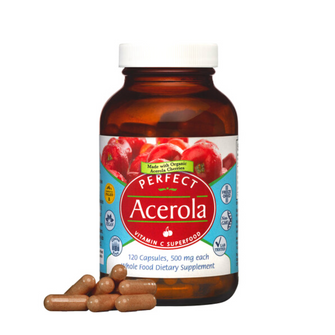
Perfect Organic Acerola Cherry Vitamin C Superfood 120 Capsules
When most of us think about vitamin C, our minds probably go straight to oranges, winter sniffles and being told to drink orange juice when we were sick as kids. 🍊
But vitamin C does considerably more in the body than many of us realise — and for women in our 40s, 50s and beyond, there are some particularly good reasons to make sure we're getting enough.
From normal collagen formation and iron absorption to antioxidant protection and immune function, vitamin C is one of those hardworking little nutrients that's easy to take for granted.
And here's something else worth knowing: certain lifestyle factors can increase vitamin C requirements, while others may simply make it harder to consistently get enough through our diet.
So... how are we doing?
First, What Does Vitamin C Actually Do?
Vitamin C — or ascorbic acid — is an essential nutrient, meaning our bodies can't manufacture it themselves.
We have to get it through food.
Vitamin C contributes to a number of normal functions in the body, including:
- Normal collagen formation
- Normal immune system function
- Protection of cells from oxidative stress
- Normal energy-yielding metabolism
- Normal functioning of the nervous system
- Increased absorption of iron
- Reduction of tiredness and fatigue
Quite the résumé for one little vitamin. 😅
And unlike some nutrients, our bodies don't keep enormous reserves of vitamin C tucked away for a rainy day. It's water-soluble, so consuming vitamin-C-rich foods regularly matters.
1. You're Simply Not Eating Many Vitamin-C-Rich Foods
This sounds obvious, but it's probably the best place to start.
Fruit and vegetables are our primary dietary sources of vitamin C, with foods such as capsicum, kiwifruit, citrus fruit, strawberries, broccoli and tomatoes all contributing.
But think about what you've eaten over the last few days.
How many different fruits and vegetables did you actually eat?
It's very easy for a busy week to turn into coffee for breakfast, something quick for lunch and whatever we can throw together for dinner.
Suddenly that colourful produce drawer we enthusiastically stocked on Sunday is looking... slightly optimistic. 😂
For women who deliberately eat lower-carbohydrate diets, it's also worth remembering that reducing fruit can inadvertently remove some useful sources of vitamin C if they're not replaced with plenty of vitamin-C-rich vegetables.
The goal isn't necessarily to eat more food — it's to make the food we're already eating count.
2. You Smoke — Or Are Regularly Exposed to Cigarette Smoke
This is one situation where vitamin C requirements genuinely can be higher.
Smoking increases oxidative stress and affects vitamin C levels in the body. Health authorities including the US National Institutes of Health note that people who smoke require more vitamin C than people who don't.
Regular exposure to second-hand smoke can also affect vitamin C status.
Even if you've never smoked, this is an interesting example of how our lifestyle and environment can influence our nutritional needs.
3. You Don't Eat Much Variety
You don't have to have a terrible diet to end up eating a rather repetitive one.
Chicken. Salad. Coffee.
Chicken. Salad. Coffee.
Maybe some eggs when we're feeling adventurous. 😂
The problem isn't necessarily those foods — it's what might be missing around them.
A varied diet makes it easier to obtain a broad spectrum of nutrients, and vitamin C is no exception.
Try rotating colourful whole foods such as:
Red capsicum • broccoli • kiwifruit • strawberries • citrus • tomatoes • leafy greens
And, of course, there's another particularly interesting fruit...
Acerola cherry. 🍒
We'll come back to that one.
4. You're Cooking the Life Out of Your Vegetables
This one surprised me when I first learnt about it.
Vitamin C is relatively sensitive to heat and water, which means prolonged cooking — particularly boiling vegetables and then throwing away the cooking water — can reduce their vitamin C content.
That doesn't mean we suddenly need to start eating raw broccoli at breakfast.
Please don't do that on my account. 😂
It simply means variety in preparation can be helpful.
Enjoy some vegetables raw, lightly steam others, stir-fry them quickly, and avoid assuming that a vegetable contains exactly the same amount of vitamin C regardless of how it's stored or prepared.
Freshness and storage can affect vitamin C content too.
5. You're Interested in Supporting Collagen Formation After 40
Here's where vitamin C becomes particularly interesting for those of us thinking about healthy ageing.
Our bodies naturally produce collagen, but collagen production changes as we get older.
Vitamin C plays an essential role in normal collagen formation for the normal function of skin, bones, cartilage, teeth, gums and blood vessels.
In other words, vitamin C and collagen aren't two completely unrelated conversations.
Vitamin C is actually involved in the biological process our bodies use to form collagen.
This is one reason I think it's worth looking at nutrition as a whole rather than becoming fixated on one fashionable ingredient at a time.
Our nutrients don't work in isolation.
The body is much cleverer — and considerably more complicated — than that.
6. You're Eating Iron-Rich Plant Foods
Here's another vitamin C benefit that doesn't get nearly as much attention as immunity.
Vitamin C increases the absorption of non-haem iron, which is the type of iron found in plant foods.
So if you're eating foods such as beans, chickpeas, lentils, tofu, nuts, seeds or leafy greens, pairing them with a source of vitamin C can help your body absorb more of the iron they contain.
For example:
Chickpeas + capsicum
Leafy greens + lemon juice
Beans + tomatoes
Sometimes good nutrition isn't about buying another thing.
It's simply about combining the foods we're already eating a little more cleverly.
And I love that.
7. You're Under the Impression Vitamin C Is Only an “Immune Vitamin”
This is probably vitamin C's biggest PR problem. 😂
We hear so much about vitamin C during winter that it's easy to mentally put it back in the cupboard as soon as spring arrives.
But our bodies require vitamin C all year round.
Yes, vitamin C contributes to normal immune system function.
But it also contributes to the protection of cells from oxidative stress, normal collagen formation and normal energy metabolism, among other functions.
None of those suddenly stop mattering because it's September.
So, How Much Vitamin C Do Women Actually Need?
For Australian adults, the Nutrient Reference Values set the Recommended Dietary Intake (RDI) for vitamin C at 45 mg per day for both adult women and men.
That amount is intended to meet the needs of nearly all healthy people.
And it's absolutely possible to obtain enough vitamin C through a varied, balanced diet.
Supplements aren't a substitute for that — nor should they be.
But some people like having another convenient way of adding vitamin C to their nutritional routine, which brings me to one of my favourite whole-food sources.
What Makes Acerola Cherry So Interesting?
Acerola — sometimes called Barbados cherry or West Indian cherry — is a small tropical fruit naturally renowned for its very high vitamin C content.
And that's exactly what originally drew me to it.
Rather than thinking of vitamin C only as a standalone synthetic ingredient, I love that acerola provides vitamin C from an actual whole-food source.
It's also why Perfect Organic Acerola has remained such a popular product with our customers over the years.
And after being unavailable for quite some time, I'm very happy to say that our Perfect Organic Acerola Capsules are finally back in stock. 🙌💜
For anyone wondering about our Acerola Powder, unfortunately we won't be bringing the powder back. Due to Australian labelling requirements and the considerable cost involved in relabelling both products, I made the decision to continue with the capsules only.
Not always the fun side of running a small supplement business — but definitely part of it!
The Takeaway
Vitamin C isn't just something to think about when someone in the office starts coughing.
It's an essential nutrient our bodies require every single day.
And after 40, when many of us are paying a little more attention to things like skin, collagen, energy, iron intake, healthy ageing and overall nutrition, it's worth making sure vitamin C hasn't quietly slipped through the cracks.
Start with food.
Eat colourfully. Mix things up. Don't boil every vegetable into submission. 😅
And if you'd like a convenient whole-food source of vitamin C to complement a balanced diet, Perfect Organic Acerola Capsules are finally back.
SHOP PERFECT ORGANIC ACEROLA CAPSULES →
Because good nutrition doesn't have an off-season. 💜
Tammy
Perfect Supplements Australia
Important: This article is provided for general nutritional and educational purposes only and is not intended to diagnose, treat, cure or prevent any disease. Supplements should not replace a balanced diet. Always read the label and follow the directions for use. If you have specific health concerns, are pregnant or breastfeeding, or take medication, speak with an appropriate healthcare professional.


