

Share
Related Products
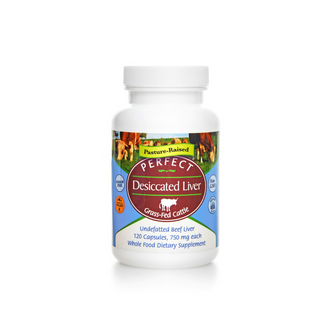
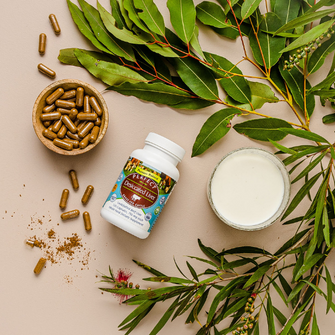
Perfect 100% Grass-fed Desiccated Liver Capsules
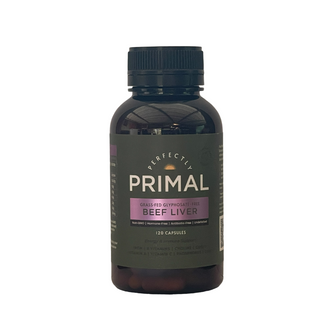
Perfectly Primal Grass-fed Glyphosate-free Non-GMO Beef Liver 120 Capsules
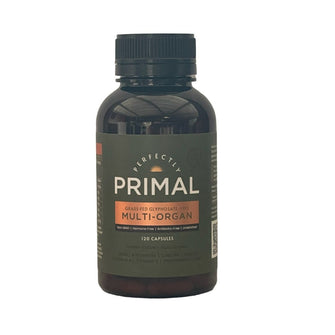
Perfectly Primal Grass-fed Glyphosate-free Non-GMO Multi Organs 120 Capsules
Let's be honest.
Liver has a public relations problem.
Somewhere between Brussels sprouts, cod liver oil and being told to finish everything on your plate, liver became one of the most misunderstood foods on the planet.
Mention liver at a dinner party and you'll usually get one of two responses:
"My grandmother used to make liver and onions."
Or...
"Eww."
There is rarely an in-between.
For many people, liver brings back childhood memories of sitting at the dinner table, pushing suspicious brown food around a plate while desperately negotiating for more mashed potato.
Perhaps you were promised dessert if you ate three bites.
Perhaps you fed it to the dog when nobody was looking.
No judgement here.
But here's the funny thing.
Despite its less-than-stellar reputation, liver has quietly become one of the most talked-about foods in the health and wellness world.
Biohackers love it.
Athletes swear by it.
Ancestral health enthusiasts won't stop talking about it.
Functional medicine practitioners frequently recommend it.
And for a while there, social media was absolutely flooded with a shirtless man carrying around bags of raw organs while shouting about ancestral living.
More on him shortly.
The reality is that liver isn't having a comeback because somebody hired a clever marketing team.
It's having a comeback because modern nutritional science keeps confirming what traditional cultures have known for thousands of years.
Liver is one of the most nutrient-dense foods on Earth.
Gram for gram, it contains an astonishing concentration of vitamins, minerals and beneficial compounds that support countless functions throughout the body.
In fact, when researchers compare foods according to nutrient density, liver consistently ranks near the very top.
If foods were high school students, liver would be the annoyingly talented kid who gets straight A's, wins the swimming carnival, plays three instruments, volunteers on weekends and somehow still has perfect hair.
Meanwhile kale is standing in the corner wondering why nobody is talking about it anymore.
Didn't That Crazy Liver Guy Eat This Stuff?
Around 2021 and 2022, it became almost impossible to scroll through social media without encountering the infamous "Liver King."
The permanently shirtless internet sensation built an empire around the idea that modern humans should return to ancestral ways of living.
His message was simple.
Eat nutrient-dense animal foods.
Spend more time outdoors.
Move your body.
Prioritise sleep.
And most importantly...
Eat your organs.
Particularly liver.
Lots and lots of liver.
To be fair, he wasn't entirely wrong.
At least not about the liver.
Sure, his enthusiasm for organ meats may have been turned up to eleven, but he was right about one thing:
Liver is a nutritional powerhouse.
The rest became somewhat controversial.
After repeatedly claiming his extraordinary physique was achieved naturally through his ancestral principles, it was later revealed that performance-enhancing drugs may have played a larger role than initially suggested.
Let's just say his transparency wasn't quite as impressive as his biceps.
The internet reacted exactly as you'd expect.
Memes were created.
Videos were made.
Think pieces were written.
People argued.
And the Liver King quickly became one of the most polarising figures in the health space.
But here's the interesting thing.
While the messenger may have been controversial, the nutritional value of liver wasn't.
Long before Instagram.
Long before TikTok.
Long before somebody decided eating raw organs on camera was a reasonable career choice...
Traditional cultures all over the world prized liver for its remarkable nutritional value.
In other words:
The Liver King didn't discover liver.
He simply reminded millions of people that one of the most nutrient-dense foods on the planet had been hiding in plain sight all along.
Fortunately, you don't need to deadlift a small car, yell about ancestral living or carry a backpack full of raw organs to enjoy the benefits.
You also don't need to eat liver raw.
Or grow a beard capable of housing several small woodland creatures.
The reality is far less dramatic.
Liver has been nourishing humans for thousands of years, and modern science continues to confirm what our ancestors instinctively understood.
This humble organ is a nutritional powerhouse.
What Exactly Is Liver?
Before we go any further, let's clear something up.
Liver is what's known as an organ meat.
Sometimes called "offal."
Yes, offal.
Which unfortunately sounds suspiciously similar to "awful." 😏
Perhaps that's another marketing challenge liver has been battling all these years.
Liver belongs to a group of foods known as organ meats, alongside foods such as heart, kidney, spleen, pancreas and brain.
All of these foods provide valuable nutrients and have been consumed by traditional cultures for generations.
But when it comes to nutrient density, liver is often considered the overachiever of the family.
Think of it as the sibling who somehow gets straight A's, wins the sports carnival and still has time to volunteer on weekends.
It's an overachiever.
And that's precisely why nutrition researchers continue to be fascinated by it.
Unlike muscle meat, which primarily provides protein, liver delivers protein alongside an impressive array of vitamins, minerals and beneficial compounds.
In fact, when researchers rank foods according to nutrient density, liver consistently appears near the very top of the list.
For this reason, liver is often referred to as nature's original multivitamin.
Long before capsules, powders, gummies and wellness influencers existed, liver was quietly delivering an extraordinary concentration of nutrition in a relatively small serving.
Of course, unlike modern multivitamins, liver doesn't come in a fancy bottle with a marketing budget.
It's simply a whole food.
And that's part of what makes it so remarkable.
Rather than supplying one or two standout nutrients, liver provides a broad spectrum of nutrients that naturally occur together within the food matrix.
Love it or hate it, there's no denying that liver is one of the most nutritionally impressive foods available.
Why Did Traditional Cultures Value Liver So Highly?
One of the most fascinating things about liver is that cultures all over the world valued it long before nutritional science existed.
Nobody was measuring vitamin A.
Nobody was talking about folate.
Nobody was analysing nutrient density scores.
Yet somehow, many traditional cultures arrived at remarkably similar conclusions.
Liver was special.
Among hunter-gatherer groups, prized organs were often consumed first.
Some cultures reserved organ meats for pregnant women.
Others gave them to growing children.
Some provided them to warriors, hunters or tribal leaders.
Why?
Because people observed something important.
Individuals who consumed nutrient-dense foods often appeared robust, resilient and well nourished.
They didn't need a laboratory to tell them what they could see with their own eyes.
This pattern shows up again and again throughout history.
The Inuit prized nutrient-rich animal foods.
The Maasai traditionally consumed blood and nutrient-dense animal foods.
Native American tribes often valued organ meats.
European cultures incorporated liver into pâtés, terrines and traditional recipes.
Australian farming families commonly consumed liver because it was viewed as one of the most nutritious foods available.
What's particularly interesting is that these cultures developed independently.
They lived in different climates.
Spoke different languages.
Followed different customs.
Yet many arrived at the same conclusion.
Liver was worth eating.
That's usually a clue worth paying attention to.
When completely unrelated populations all come to similar conclusions over hundreds or thousands of years, it's often because there was something genuinely valuable about the food in question.
And modern science suggests they may have been right.
Top 10 Potential Benefits of Consuming Liver
So why all the fuss about liver?
While we'll explore the nutrients in much more detail throughout this article (and our upcoming nutrition deep-dive), here are some of the key reasons liver has earned its reputation as one of nature's most nutrient-dense foods.
1. Supports Healthy Energy Production
Liver naturally contains vitamin B12, iron, folate and other nutrients involved in normal energy metabolism and the production of healthy red blood cells.
2. Supports Brain Function
Nutrients found in liver, including vitamin B12, choline and iron, play important roles in cognitive function, memory and nervous system health.
3. Supports Eye Health
Liver is one of nature's richest sources of preformed vitamin A (retinol), which contributes to the maintenance of normal vision.
4. Supports Healthy Skin
Vitamin A, zinc, copper and protein all play important roles in maintaining healthy skin structure and function.
5. Supports Immune Function
Several nutrients found in liver, including vitamin A, zinc, selenium and vitamin B12, contribute to normal immune system function.
6. Supports Healthy Red Blood Cell Production
Liver naturally provides iron, folate and vitamin B12 — nutrients that work together to support the production of healthy red blood cells.
7. Supports Hormone Health
Many of the vitamins and minerals found in liver play important roles in the body's natural hormone production and regulatory processes.
8. Supports Collagen and Connective Tissue Formation
Copper, vitamin A and protein are involved in the maintenance of connective tissue and collagen formation within the body.
9. Exceptional Nutrient Density
Gram for gram, liver contains an extraordinary concentration of vitamins and minerals, making it one of the most nutrient-dense foods available.
10. Supports Healthy Pregnancy and Fertility
Liver naturally contains nutrients including folate, vitamin A, iron and vitamin B12, which play important roles in reproductive health and fetal development.*
*Pregnant women or those trying to conceive should seek personalised advice from their qualified healthcare practitioner before consuming liver or liver supplements, as liver is naturally high in vitamin A.
11. Traditional "Like Supports Like" Philosophy
For thousands of years, many traditional cultures believed that consuming specific animal organs could help nourish the corresponding organ systems within the body.
This concept is often summarised as "like supports like."
For example, liver was traditionally consumed to support liver health, while heart was consumed to support the heart.
While modern science generally explains the benefits of liver through its impressive nutrient profile rather than this traditional philosophy, many people are drawn to organ meats because of both their nutritional value and their long history of traditional use.
Beef Liver vs Other Organ Meats
Not all organ meats are created equal.
Each offers its own unique nutritional profile.
Heart contains notable amounts of CoQ10 and supports cellular energy production.
Kidney provides selenium and various minerals.
Brain contains specialised fats.
Pancreas and spleen offer their own unique nutrient compositions.
But liver is often considered the nutritional superstar of the group.
Why?
Because few foods can match the sheer concentration of vitamins and minerals found within it.
It's essentially the nutritional equivalent of showing up to a casual neighbourhood tennis match and discovering Roger Federer is on the opposing team.
The competition isn't even close.
This is one of the reasons why desiccated liver capsules have become increasingly popular.
Many people recognise the nutritional value of liver.
They simply don't enjoy the taste.
And let's be honest.
Liver has a flavour that can best be described as "memorable."
Some people love it.
Others would rather assemble flat-pack furniture blindfolded.
Fortunately, there are now ways to enjoy the nutritional benefits of liver without having to convince yourself that liver and onions is your favourite meal.
And that's exactly why liver has found a new audience in the modern wellness world.
Ready To Add More Liver To Your Diet?
If reading this article has you curious about incorporating more liver into your routine, you're not alone.
Many people recognise the nutritional value of liver but simply don't enjoy the taste (and let's be honest, liver isn't exactly known for winning culinary awards).
Fortunately, there are convenient ways to enjoy the benefits of liver without having to cook it yourself.
You may wish to explore:
Perfect Supplements Desiccated Liver Capsules
Made from 100% grass-fed and finished Argentinian beef liver, these convenient capsules provide a simple way to incorporate liver into your daily routine without the taste or preparation. Click here to view the product.
Perfectly Primal® Beef Liver Capsules
A premium freeze-dried beef liver supplement made from grass-fed and finished New Zealand cattle. A convenient option for those looking to include nutrient-dense liver as part of a whole-food approach to wellness. Click here to view the product.
Perfectly Primal® Multi-Organs
Looking to go beyond liver? Multi-Organs combines six nutrient-dense organs including liver, heart, kidney, spleen, pancreas and brain, providing a broader spectrum of ancestral nutrition. Click here to view the product.
Whichever option you choose, the goal is the same: making it easier to incorporate some of nature's most nutrient-dense foods into a modern lifestyle.
Disclaimer
This article is intended for educational and informational purposes only and is not intended to diagnose, treat, cure or prevent any disease.
The information provided should not be considered medical or healthcare advice and should not replace advice from your doctor, naturopath, qualified healthcare practitioner or other appropriately trained health professional.
Individual nutritional requirements vary from person to person.
Pregnant women, women who are breastfeeding, those trying to conceive, individuals with existing medical conditions, or those taking medications should consult their qualified healthcare practitioner before making significant dietary changes or commencing any new supplement regimen.
Always read the label and follow directions for use. If symptoms persist, worsen or concern you, seek advice from your healthcare professional.


