

Share
Related Products
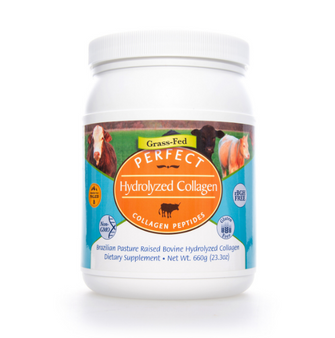
Perfect Hydrolyzed Collagen Powder Grass-fed Glyphosate-free
Bovine vs Marine Collagen: Which Should You Choose?
If you've been thinking about adding collagen to your daily routine, you've probably come across one of the most common questions:
Is bovine collagen or marine collagen better?
The truth is that both can be excellent sources of collagen peptides, but the best choice depends on your health goals, dietary preferences and, importantly, the quality of the product you're buying.
One misconception we'd like to clear up straight away is that marine collagen is not vegan. Despite what some people believe, marine collagen is typically derived from fish skin, scales or bones—not seaweed or other marine plants.
In this article, we'll explain the differences between bovine and marine collagen, explore the science behind each, and help you decide which option may be the best fit for you.

Why Is Collagen Important?
Collagen is the most abundant protein in the human body. It provides structure and strength to our skin, bones, joints, tendons, ligaments and connective tissues. It also plays an important role in maintaining healthy cartilage and supporting the integrity of blood vessels and many other tissues throughout the body.¹
From around our 30s onwards, our body's natural collagen production gradually begins to decline as part of the normal ageing process. This natural decline contributes to many of the visible and physical changes we associate with ageing, including reduced skin elasticity, the appearance of fine lines and wrinkles, and changes in joint and connective tissue health.⁹
While we can't stop the ageing process, supplementing with a high-quality collagen such as Perfect Hydrolyzed Collagen may help support healthy skin elasticity, hydration and connective tissue by providing the body with collagen peptides that are readily absorbed.² ³ Combined with a balanced diet and healthy lifestyle, collagen supplementation can be a simple and effective way to support healthy ageing from the inside out.
Bovine vs Marine Collagen at a Glance
| Feature | Bovine Collagen | Marine Collagen |
|---|---|---|
| Primary collagen types | Type I & Type III | Type I |
| Best suited for | Skin, connective tissue, hair, nails and overall structural support | Primarily skin support |
| Source | Grass-fed cattle | Fish |
| Taste | Neutral | Can have a fishy taste |
| Suitable for fish allergy | ✔ Yes | ✖ No |
| What to look for | Grass-fed, pasture-raised, third-party tested | Wild-caught or responsibly sourced, transparent testing |
What Is Bovine Collagen?
Bovine collagen is sourced from cattle and is naturally rich in Type I and Type III collagen, the two most abundant collagen types found in the human body.
These collagen types are found throughout the skin, muscles, tendons, ligaments and connective tissues, making bovine collagen an excellent all-round choice for supporting whole-body health.
Research suggests collagen peptides may help support:
- Healthy skin elasticity and hydration²
- Healthy hair and nails²
- Healthy connective tissue²
- Overall structural support throughout the body
At Perfect Supplements Australia, we're proud to offer Perfect Hydrolyzed Collagen, sourced from grass-fed, pasture-raised cattle. The collagen is hydrolyzed into small collagen peptides, allowing it to dissolve easily and be readily absorbed.
We also offer Perfect Type II Collagen, containing undenatured Type II collagen—a specialised form of collagen that has been researched specifically for supporting healthy joint function and comfort.⁴
What About Marine Collagen?
Marine collagen is derived from fish and is primarily composed of Type I collagen, the most abundant collagen found in healthy skin.
For this reason, marine collagen is often chosen by people looking to support skin hydration, elasticity and the visible signs of ageing. Research suggests marine collagen peptides may provide similar skin health benefits to bovine collagen.²
Like hydrolyzed bovine collagen, marine collagen peptides are generally well absorbed by the body.
However, unlike bovine collagen, marine collagen typically contains only Type I collagen, whereas bovine collagen naturally provides both Type I and Type III collagen. Together, these collagen types support healthy skin, connective tissue, muscles, tendons and ligaments throughout the body.
For people seeking a versatile collagen supplement that supports more than just skin health, grass-fed bovine collagen is often the preferred choice.
Marine collagen is also unsuitable for people with fish allergies.
Why Marine Collagen Quality Matters
Not all marine collagen is created equal.
Many marine collagen products are sourced from farmed tilapia, particularly from large-scale aquaculture operations in parts of Asia. Farming practices vary considerably around the world, making it important to understand exactly where your collagen comes from.
Some intensive aquaculture systems may use antibiotics, veterinary medicines and other chemical treatments to manage disease and maintain production. Environmental organisations have also raised concerns about the impact that poorly managed fish farming can have on surrounding waterways and marine ecosystems.⁵ ⁶
Manufacturing methods can also differ between brands. While many reputable manufacturers now use modern enzymatic processing techniques, others may use chemical extraction methods as part of collagen production.
If you're choosing marine collagen, look for brands that clearly disclose:
- The species of fish used
- Whether the fish are wild-caught or responsibly farmed
- Third-party purity testing
- Manufacturing standards
- Sustainability practices
At Perfect Supplements Australia, we've chosen to offer grass-fed, pasture-raised bovine collagen because we believe knowing where your collagen comes from is just as important as the collagen itself. With exceptional traceability, rigorous purity testing and premium-quality ingredients, it's a collagen you can feel confident using every day.
Which Collagen Should You Choose?
Rather than asking which collagen is "best", it's often more helpful to ask:
What are you hoping to support?
| Your Goal | Recommended Option |
|---|---|
| Healthy skin | Bovine or Marine Collagen |
| Hair & nails | Bovine or Marine Collagen |
| Healthy connective tissue | Grass-fed Bovine Collagen |
| Whole-body structural support | Grass-fed Bovine Collagen |
| Joint health | Undenatured Type II Collagen |
The Bottom Line
Both bovine and marine collagen have their place, and both can be valuable additions to a healthy lifestyle.
However, for most people looking for a versatile collagen supplement, grass-fed bovine collagen offers an excellent combination of Type I and Type III collagen, exceptional traceability and outstanding versatility for whole-body support.
At Perfect Supplements Australia, we're proud to offer the Perfect Supplements collagen range, including Perfect Hydrolyzed Collagen and Perfect Type II Collagen, carefully selected for their quality, purity and transparency.
If you're ready to experience the benefits of premium-quality collagen, we'd love to help you choose the product that's right for you.
👉 Shop the Perfect Collagen range today.
Disclaimer
The information provided in this article is intended for general educational purposes only and does not constitute medical advice. The potential benefits of collagen discussed are based on current scientific research; however, individual results may vary. Dietary supplements should be used in conjunction with a balanced diet and healthy lifestyle, not as a replacement for them. Always seek advice from your healthcare professional before starting any new supplement, particularly if you are pregnant, breastfeeding, taking medication or have an existing medical condition.
References
- Ricard-Blum S. The Collagen Family. Cold Spring Harbor Perspectives in Biology. 2011;3(1):a004978. https://doi.org/10.1101/cshperspect.a004978
- de Miranda RB, Weimer P, Rossi RC. Effects of hydrolyzed collagen supplementation on skin aging: A systematic review and meta-analysis. International Journal of Dermatology. 2021;60(12):1449–1461. https://doi.org/10.1111/ijd.15518
- Choi FD, Sung CT, Juhasz MLW, Mesinkovska NA. Oral collagen supplementation: A systematic review of dermatological applications. Journal of Drugs in Dermatology. 2019;18(1):9–16.
- Lugo JP, Saiyed ZM, Lane NE. Efficacy and tolerability of an undenatured type II collagen supplement in healthy subjects with activity-related joint discomfort. Journal of the International Society of Sports Nutrition. 2016;13:48. https://doi.org/10.1186/s12970-016-0156-9
- Food and Agriculture Organization of the United Nations (FAO). The State of World Fisheries and Aquaculture 2024. https://www.fao.org/sofia/en
- World Health Organization. Antimicrobial resistance. https://www.who.int/news-room/fact-sheets/detail/antimicrobial-resistance
- National Institutes of Health. Office of Dietary Supplements. https://ods.od.nih.gov/
- European Food Safety Authority. https://www.efsa.europa.eu/
- Varani J, Dame MK, Rittie L, et al. Decreased collagen production in chronologically aged skin. American Journal of Pathology. 2006;168(6):1861–1868. https://doi.org/10.2353/ajpath.2006.051302


