

Share
Related Products
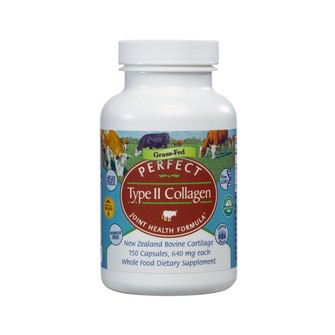
Perfect Type II Collagen Capsules NZ Grass-fed (Joint Health)
When we think about healthy ageing, we tend to think about our skin, energy levels, muscle strength and perhaps even our brain health.
But what about our joints?
For many of us, joint health isn't something we give much thought to while everything is moving comfortably. We walk, exercise, climb stairs, garden, travel and get on with our lives without really thinking about how much we ask of our joints every single day.
Then somewhere along the way, we may become a little more aware of them.
Perhaps getting up after sitting for a while doesn't feel quite as effortless as it once did. Maybe your knees make themselves known after a long walk or workout. Or perhaps you've simply reached a stage of life where you're thinking more about how you want your body to feel and function in the years ahead.
But looking after our joints doesn't have to begin only when they start demanding our attention.
Just as we eat well, exercise and maintain muscle to support healthy ageing, we can also make joint health and mobility part of the bigger picture.
What happens to our joints as we age?
Our joints are incredibly hardworking structures.
Cartilage is the smooth, resilient connective tissue covering the ends of bones within many of our joints. It helps our joints move smoothly and helps absorb the forces generated through everyday movement.
And one of the major structural proteins found in cartilage is Type II collagen.
That's an important distinction, because not all collagen is the same.
Type II collagen vs hydrolysed collagen: what's the difference?
If you already use a collagen powder, you might be wondering whether you need Type II collagen as well.
They're quite different.
Hydrolysed collagen has been broken down into smaller collagen peptides and is commonly used as a convenient way to add collagen peptides to the diet.
Undenatured Type II collagen, on the other hand, retains its native three-dimensional structure and is generally consumed in much smaller quantities.
Type II collagen is the predominant collagen found in articular cartilage, which is why it has become an area of interest in research relating to joint health, joint function and mobility.
Rather than thinking of Type II collagen and hydrolysed collagen as competing products, it makes more sense to think of them as different forms of collagen used for different purposes.
Why think about joint health before it becomes a priority?
There is something powerful about changing the way we think about healthy ageing.
So often we don't start paying attention to a particular area of our health until something changes.
But many of the healthy habits we practise aren't about fixing something that's wrong.
We strength train because we want to maintain strong muscles.
We prioritise protein and nourishing foods because we want to support our bodies as we age.
We look after our skin long before we're concerned about every fine line.
And our joints deserve that same consideration.
For women in their 40s, 50s, 60s and beyond, maintaining the freedom to walk, exercise, travel, garden, practise yoga, play with the grandkids or simply move comfortably through everyday life can become increasingly important.
Supporting joint health can simply be another part of investing in the body you want to keep moving in for many years to come.
What does the research say about Type II collagen?
Type II collagen has been investigated in human clinical trials, including studies involving otherwise healthy adults experiencing joint discomfort associated with physical activity.
In a 2013 randomised, double-blind, placebo-controlled study, 55 healthy adults with no history of arthritic disease or joint pain at rest, but who experienced knee discomfort during strenuous exercise, received either a placebo or 40 mg of UC-II® undenatured Type II collagen daily for 120 days.
Researchers reported a statistically significant improvement in average knee extension in the Type II collagen group compared with placebo at 120 days. Other exercise-related measures were also investigated.¹
It's worth noting that this study was funded by InterHealth Nutraceuticals, the manufacturer of the UC-II® ingredient, and several authors were employees or consultants of the company.
More recently, a 2026 randomised, double-blind, placebo-controlled study followed 74 healthy adults experiencing joint discomfort during physical activity. Participants received either a placebo or 40 mg per day of native Type II collagen for 180 days.
Both groups improved on the study's overall joint-function measure at 180 days. The researchers also reported differences between groups in some measures and subgroups, including recovery time following an exercise test.² This is important context: the findings are interesting, but they shouldn't be interpreted as every outcome favouring Type II collagen.
This study was funded by Bioiberica S.A.U., with several authors affiliated with the company's research and development division.
These studies form part of the research investigating native or undenatured Type II collagen and joint health. As with any nutritional ingredient, individual studies should be considered within the broader body of evidence rather than viewed in isolation.
Joint health is about more than one supplement
Of course, no supplement replaces the foundations of a healthy lifestyle.
Regular movement, resistance training, maintaining muscle strength, eating a nutritious diet and consuming adequate protein are all valuable parts of healthy ageing.
And perhaps one of the most important things we can do is simply keep moving.
The goal isn't to become fearful about what ageing might bring.
Quite the opposite.
It's about giving ourselves the best opportunity to continue doing the things we love.
For some people, Type II collagen may be one additional piece of that healthy-ageing routine.
A small habit with a long-term mindset
One of the things we love about Type II collagen capsules is their simplicity.
There's no powder to measure and no smoothie to make. They can easily become part of an existing daily supplement routine.
But perhaps the bigger message isn't really about another supplement at all.
It's about changing the way we think about looking after ourselves as we get older.
You don't necessarily have to wait until your joints are complaining before you start thinking about joint health.
Healthy ageing is about supporting the body you have today while keeping an eye on the life you'd still like to be living in your 50s, 60s, 70s and beyond.
Because being able to move freely, stay active and keep doing the things you love?
That's something worth looking after.
Perfect Type II Collagen
Perfect Type II Collagen provides undenatured Type II collagen in convenient daily capsules.
[SHOP PERFECT TYPE II COLLAGEN]
ALWAYS READ THE LABEL AND FOLLOW THE DIRECTIONS FOR USE.
References
1. Lugo JP, Saiyed ZM, Lau FC, et al. Undenatured type II collagen (UC-II®) for joint support: a randomized, double-blind, placebo-controlled study in healthy volunteers. Journal of the International Society of Sports Nutrition. 2013;10:48.
The study was funded by InterHealth Nutraceuticals, Inc. The published article reports relevant author employment, consulting relationships and research funding.
2. Möller I, Martínez K, Terradillos-Guillén A, et al. Efficacy and tolerability of native (undenatured) type II collagen supplementation for joint health in healthy volunteers: a randomized double-blind placebo-controlled study. Nutrition Journal. 2026;25:46.
The study was funded by Bioiberica S.A.U.; several authors were affiliated with Bioiberica's R&D division.
Disclaimer
This article is provided for general educational and informational purposes only and is not intended to diagnose, treat, cure or prevent any disease or medical condition. It is not a substitute for individual medical advice. If you have an existing medical condition, are pregnant or breastfeeding, take medication, or have concerns about your joint health, please seek advice from an appropriately qualified healthcare professional.
Individual needs and responses may vary.
ALWAYS READ THE LABEL AND FOLLOW THE DIRECTIONS FOR USE.


