

Share
Related Products
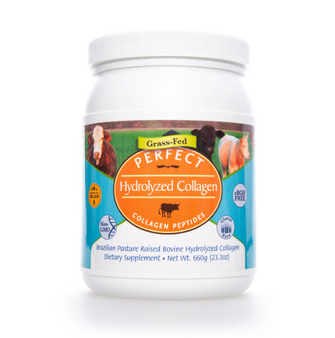
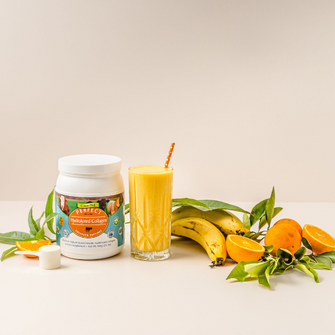
Perfect Hydrolyzed Collagen Powder Grass-fed Glyphosate-free
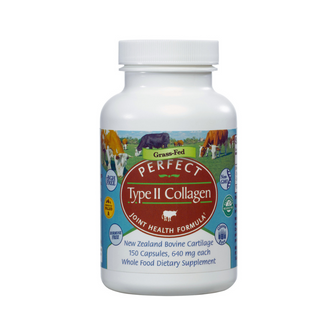
Perfect Type II Collagen Capsules NZ Grass-fed (Joint Health)
Collagen for skin, collagen for joints, collagen powder, collagen capsules… what's the difference, and how do you know which one to choose?
If you've ever found yourself wondering whether you need type I, II or III collagen, you're certainly not alone!
It's a common question, particularly for customers trying to decide between Perfect Hydrolyzed Collagen Powder and Perfect Type II Collagen Capsules.
And while both products contain collagen, they're actually quite different.
The simplest way to understand them is this:
Types I & III are particularly associated with the skin and structural connective tissues, while type II is the main collagen found in cartilage.
But there's a little more to the story, especially when it comes to collagen supplementation.
Let's break it down.
First, What Exactly Is Collagen?
Collagen is the most abundant protein in the human body. Think of it as part of the structural framework that helps give our skin, bones, tendons, ligaments and cartilage their strength and integrity.
Our bodies naturally produce collagen, but this process changes as we age.
Factors such as ageing, sun exposure, smoking and hormonal changes can affect collagen production and breakdown, influencing the appearance of our skin and the health of our connective tissues.
This is one reason collagen supplements have become so popular, particularly among women approaching or experiencing menopause.
But here's something worth knowing: not all collagen is the same.
Scientists have identified at least 28 different types of collagen, although types I, II and III are among the most important and best-known.
Each plays a different structural role in the body.
Type I Collagen: The Skin & Structural Support Collagen
Type I is the most abundant type of collagen in the human body.
It's found predominantly in:
-
Skin
-
Bones
-
Tendons
-
Ligaments
-
Other connective tissues
Why Is Type I Collagen Important?
Type I collagen provides strength and structure to many of our tissues.
In the skin, it forms an important part of the dermis, helping maintain the structural framework associated with skin firmness and resilience.
It's also a major component of tendons and bones.
What Does the Research Say About Supplementation?
Studies investigating hydrolyzed collagen peptides have reported potential improvements in skin hydration and elasticity.
For example, a 2023 systematic review and meta-analysis of 26 randomised controlled trials involving 1,721 participants reported improvements in both skin hydration and elasticity among people taking hydrolyzed collagen.
However, the evidence isn't entirely consistent, and researchers have highlighted limitations involving study quality, funding and differences between formulations.
The takeaway: Type I collagen is particularly important to the structure of your skin and connective tissues. Hydrolyzed collagen supplements may offer skin-related benefits, although individual results vary.
Type III Collagen: The Skin & Tissue Support Partner
Type III collagen is commonly found alongside type I collagen, especially in tissues that require both strength and flexibility.
It's naturally present in:
-
Skin
-
Blood vessel walls
-
Internal organs
-
Various soft connective tissues
Why Is Type III Collagen Important?
Type III collagen forms part of the supportive framework of our skin and other soft tissues.
It works alongside type I collagen to help maintain tissue structure and integrity.
Because these two types naturally occur together in many connective tissues, you'll often find them paired in bovine collagen supplements.
Does Type III Collagen Have Specific Benefits?
Type III plays an important biological role in tissue structure and repair.
However, clinical studies haven't established that taking type III collagen alone produces specific benefits independent of type I collagen.
That's an important distinction.
The takeaway: Types I and III naturally work alongside one another in the body, making them a common combination in collagen peptide supplements.
Type II Collagen: The Cartilage & Joint Collagen
Now let's talk about type II collagen, because this is where things become particularly interesting!
While types I and III are associated with skin and various structural tissues, type II is the predominant collagen found in articular cartilage — the smooth, cushioning tissue covering the ends of bones within our joints.
Type II collagen helps provide cartilage with its structural framework, contributing to its ability to withstand movement and mechanical stress.
Why Is Type II Collagen Important?
Healthy cartilage plays an important role in comfortable movement and joint function.
As we age, changes in cartilage and other joint tissues can contribute to reduced mobility and joint discomfort.
Type II collagen has therefore attracted considerable scientific interest in relation to joint health.
What Does the Research Say?
Clinical studies of certain undenatured type II collagen formulations have reported improvements in knee joint symptoms and physical function in people with osteoarthritis.
One randomised controlled trial involving 191 participants investigated a specific chicken-derived undenatured type II collagen ingredient over 180 days, reporting improvements in several measures of knee discomfort and function.
However, it's important to understand that not every type II collagen supplement is identical.
The source, processing method, dosage and additional components can all differ.
Results from studies using one specific ingredient shouldn't automatically be assumed to apply to every type II collagen product.
The takeaway: Type II collagen is the primary structural collagen in cartilage, and certain undenatured type II collagen formulations have shown promising results in joint-health research.
So, What's the Difference Between the Two Perfect Collagen Products?
This is where understanding collagen types becomes particularly useful!
Perfect Supplements offers two distinct collagen products with different compositions and nutritional applications.
Perfect Hydrolyzed Collagen Powder — Types I & III
Perfect Hydrolyzed Collagen Powder contains type I and type III collagen peptides, sourced from Brazilian pasture-raised, grass-fed cattle.
The collagen has been hydrolyzed, meaning it's broken down into smaller peptides through a process called hydrolysis.
This creates a powder that's convenient to mix into everyday foods and drinks.
Product highlights:
-
Contains type I and type III collagen peptides
-
Sourced from Brazilian grass-fed, pasture-raised cattle
-
Pure, unflavoured collagen without unnecessary fillers
-
Generous 660 g tub
-
60 servings of 11 g each
-
Convenient for coffee, smoothies, yoghurt and recipes
Who Might Prefer This Collagen?
Perfect Hydrolyzed Collagen Powder may appeal to people who want to incorporate collagen peptides into their daily nutritional routine, particularly those interested in skin health and general connective tissue nutrition.
It's also a convenient way to add collagen-derived protein to the diet.
EXPLORE PERFECT HYDROLYZED COLLAGEN POWDER
Perfect Type II Collagen Capsules — Cartilage-Based Collagen
Perfect Type II Collagen Capsules are quite different.
Instead of containing hydrolyzed collagen peptides, these capsules contain freeze-dried bovine cartilage sourced from New Zealand pasture-raised, grass-fed cattle.
Cartilage is naturally rich in type II collagen and also contains other important structural compounds.
Each five-capsule serving provides:
-
3,200 mg of bovine cartilage
-
Approximately 1,280 mg of type II collagen
-
Approximately 575 mg of chondroitin sulphate
-
Naturally occurring cartilage components, including proteoglycans and glycosaminoglycans
Unlike Perfect Hydrolyzed Collagen Powder, this formula contains undenatured type II collagen as part of its whole-cartilage composition.
Undenatured means the collagen has been processed to preserve its natural structure rather than deliberately breaking it down into small peptides.
Who Might Prefer This Collagen?
Perfect Type II Collagen Capsules may appeal to people whose main nutritional interest is cartilage and joint health.
They also offer the convenience of capsules rather than a powder.
It's important to remember that while research into certain undenatured type II collagen ingredients is promising, those findings don't necessarily establish the same clinical effects for this particular bovine cartilage formula.
EXPLORE PERFECT TYPE II COLLAGEN CAPSULES
Collagen Types I, II & III: At a Glance
| Collagen type | Main structural role | Perfect Supplements product |
|---|---|---|
| Type I | Skin, bones, tendons and ligaments | Perfect Hydrolyzed Collagen Powder |
| Type II | Cartilage and joint structure | Perfect Type II Collagen Capsules |
| Type III | Skin, blood vessels and soft connective tissues | Perfect Hydrolyzed Collagen Powder |
These are the natural biological roles of the different collagen types, rather than guaranteed outcomes from taking a supplement.
Can You Take Type I & III Collagen and Type II Collagen Together?
Yes, these different collagen supplements can potentially be used as part of the same nutritional routine.
Because Perfect Hydrolyzed Collagen Powder and Perfect Type II Collagen Capsules have different compositions, some customers may choose to include both.
For example, someone interested in collagen peptide supplementation for skin health might use Perfect Hydrolyzed Collagen Powder, while also choosing Perfect Type II Collagen Capsules as a source of cartilage-derived nutrients.
However, more collagen isn't automatically better, and taking both products hasn't been conclusively shown to deliver superior outcomes compared with taking either one alone.
Always follow the individual product directions, and check with your healthcare professional if you're managing a medical condition, taking medication or unsure which supplement is appropriate.
Frequently Asked Questions
Is Type II Collagen Better Than Type I and III?
Not necessarily! They're different forms of collagen with different roles in the body.
Types I and III are important components of skin and various connective tissues, while type II is primarily associated with cartilage.
The best supplement choice depends on your nutritional goals, the product formulation and the available research.
Is Hydrolyzed Collagen Good for Joints Too?
Potentially, yes.
Although type II is the main collagen found in cartilage, research has also investigated hydrolyzed collagen peptides for joint-related outcomes.
Collagen supplementation is therefore not as simple as saying types I and III are only for skin and type II is only for joints.
Both types of supplements have been investigated in joint-health research, although their compositions and proposed mechanisms differ.
Does Type II Collagen Help With Skin Health?
Type II collagen's primary structural role is in cartilage rather than the skin.
Most clinical research into collagen supplementation for skin hydration and elasticity has focused on hydrolyzed collagen peptides rather than undenatured type II collagen.
Which Collagen Should I Choose if I'm Over 40?
Age alone doesn't determine which collagen supplement is best.
If you're primarily interested in skin health and adding collagen peptides to your daily diet, Perfect Hydrolyzed Collagen Powder may be worth exploring.
If you're particularly interested in cartilage-based nutrition, Perfect Type II Collagen Capsules offer a different option.
The Bottom Line: Different Collagen Types, Different Roles
When it comes to collagen, understanding the different types can help take the confusion out of choosing a supplement.
Types I & III are important structural components of our skin and connective tissues.
Type II is the primary collagen found in cartilage.
Perfect Hydrolyzed Collagen Powder provides types I and III in hydrolyzed peptide form, while Perfect Type II Collagen Capsules provide type II collagen alongside other naturally occurring compounds from bovine cartilage.
Neither is automatically better than the other — they're simply different products.
And at Perfect Supplements Australia, we believe informed choices are always the best choices. 💜
Scientific References & Further Reading
-
Collagen-Based Biomaterials for Tissue Engineering Applications. Review of collagen types, structure and natural distribution. Read the research
-
Pu et al. (2023). Effects of Oral Collagen for Skin Anti-Aging: A Systematic Review and Meta-Analysis. Nutrients, 15(9), 2080. Read the study
-
Myung et al. (2025). Effects of Collagen Supplements on Skin Aging: A Systematic Review and Meta-Analysis of Randomized Controlled Trials. American Journal of Medicine. Read the study
-
Martínez-Puig et al. (2023). Collagen Supplementation for Joint Health: The Link between Composition and Scientific Knowledge. Review of collagen formulations and joint-health research. Read the research
-
Lugo et al. (2016). Efficacy and Tolerability of an Undenatured Type II Collagen Supplement in Modulating Knee Osteoarthritis Symptoms. Randomised controlled trial investigating a specific chicken-derived formulation. Read the study
Disclaimer: This article is intended for general educational purposes and does not constitute medical advice. Collagen supplements are not intended to diagnose, treat or cure medical conditions. Research findings vary by formulation, dosage and population and may not apply directly to the products discussed.


