

Share
Related Products
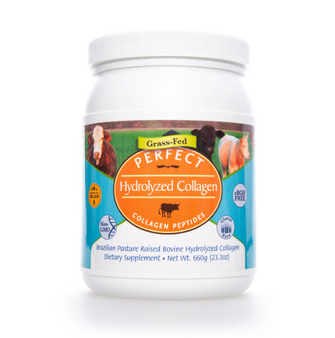
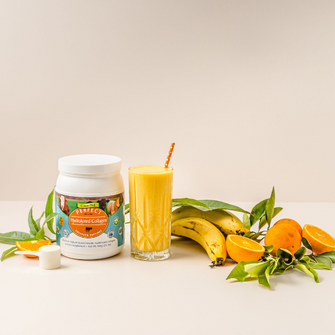
Perfect Hydrolyzed Collagen Powder Grass-fed Glyphosate-free
Hydrolyzed Collagen After 40: 10 Questions Women Ask Me All the Time
If you've been around Perfect Supplements Australia for a while, you'll know that hydrolyzed collagen is one of my absolute staples.
I've personally been taking Perfect Hydrolyzed Collagen for around 10 years now, and after selling it for many years, I've also answered a lot of collagen questions. 😅
Can I put it in coffee?
When should I take it?
Does collagen count as protein?
How long does it take to work?
And what exactly does hydrolyzed mean anyway?
So I thought I'd put the answers to some of the questions I'm asked most often in one handy place — particularly for those of us navigating our 40s, 50s and beyond.
Because while collagen might be associated with skin and beauty, there's much more to the story.
1. What Is Hydrolyzed Collagen?
Collagen is a structural protein naturally found throughout the body, including in our skin, bones, tendons, ligaments and connective tissues.
Our bodies make collagen naturally, but collagen production changes as we age — which is one reason collagen has become such a popular topic for women over 40.
Hydrolyzed collagen, also known as collagen peptides, is collagen that has been broken down through a process called hydrolysis into smaller peptides.
This makes it easy to dissolve into liquids and convenient to incorporate into your everyday diet.
Perfect Hydrolyzed Collagen is sourced from pasture-raised Brazilian cattle and contains just one ingredient: hydrolyzed collagen.
Nice and simple. 💜
2. Does Hydrolyzed Collagen Count as Protein?
Yes! And this is something people sometimes don't realise.
One scoop of Perfect Hydrolyzed Collagen provides approximately 11 grams of protein.
So if you're adding a scoop to your morning coffee, smoothie or yoghurt, that protein does contribute towards your overall daily protein intake.
This becomes particularly interesting as we move through our 40s, 50s and beyond because maintaining muscle becomes increasingly important as we age.
There is, however, an important distinction.
Collagen has a different amino-acid profile from complete proteins such as meat, fish, eggs and dairy. It isn't considered a complete protein because it doesn't provide all nine essential amino acids in sufficient amounts.
So I don't recommend thinking of collagen as a replacement for the other quality proteins in your diet.
Instead, think:
Collagen + a varied, protein-rich diet.
Not:
Collagen = all the protein I need today. 😅
3. How Should I Take Hydrolyzed Collagen?
This is probably one of the things I love most about it.
Hydrolyzed collagen is incredibly versatile.
You can mix it into:
-
Coffee or tea
-
Water
-
Smoothies
-
Yoghurt
-
Porridge
-
Soups
-
Pancakes
-
Protein shakes
-
Other hot or cold drinks
And yes — you can put your collagen in hot coffee. ☕️
Hydrolyzed collagen is designed to dissolve easily, so you don't need to make an elaborate wellness concoction every morning unless you genuinely enjoy doing that.
Personally, I'm a big believer in making healthy habits easy enough that you'll actually keep doing them.
4. When Is the Best Time to Take Collagen — Morning or Night?
Here's some good news:
You don't need to set an alarm for the magical collagen hour. 😂
There isn't good evidence showing that everyone needs to take hydrolyzed collagen at one particular time of day to obtain its nutritional value.
Some people love putting it in their morning coffee because it's an incredibly easy habit to remember.
Others add it to something later in the day.
The best time is generally the time that works consistently for you.
Rather than worrying about 7am versus 7pm, focus on finding a routine you can realistically maintain.
5. How Long Does Hydrolyzed Collagen Take to Work?
This is probably the question everyone really wants answered!
The answer is unfortunately not:
“Take one scoop on Tuesday and wake up looking 25 on Wednesday.” 😂
Individual experiences vary considerably, and different collagen studies have investigated different outcomes, doses and timeframes.
Research into collagen peptides has explored areas including skin hydration and elasticity and aspects of joint and connective-tissue health, but collagen isn't an overnight fix.
It's also important to remember that your overall diet, age, lifestyle, sun exposure, exercise and many other factors contribute to how your body looks and feels.
I prefer to think of collagen as part of a consistent, long-term nutritional routine rather than something to take for a couple of weeks looking for a dramatic transformation.
6. Can I Take Hydrolyzed Collagen With Other Supplements?
For most people, collagen is simply another source of dietary protein and amino acids and can generally be incorporated alongside other foods and supplements.
One particularly interesting nutrient to consider alongside your overall protein intake is vitamin C.
Vitamin C contributes to normal collagen formation for the normal function of skin, bones and cartilage, among other tissues.
And importantly, you don't necessarily need another supplement to get it.
Vitamin-C-rich foods include things such as capsicum, kiwifruit, citrus, strawberries and broccoli.
Acerola cherry is another naturally rich source of vitamin C — and one we're rather fond of around here. 🍒
As always, if you have a medical condition, take medication, are pregnant or breastfeeding, or aren't sure whether a supplement is appropriate for you, speak with an appropriate healthcare professional.
7. Is Hydrolyzed Collagen Vegetarian or Vegan?
No.
Collagen naturally comes from animal connective tissues, so genuine collagen supplements are not vegetarian or vegan.
Hydrolyzed collagen supplements are commonly derived from bovine or marine sources.
You'll sometimes see products marketed as “vegan collagen” or “plant-based collagen.” These are generally not collagen peptides equivalent to animal-derived collagen. Instead, they typically contain nutrients or ingredients intended to support the body's own normal collagen production.
So it's worth reading the ingredient list rather than relying solely on what's written in enormous letters on the front of the packet. 😉
8. Which Collagen Is Best for Joint Health?
This is where the type of collagen matters.
Hydrolyzed collagen peptides provide amino acids and protein and can be a useful addition to your overall nutritional intake. But if your main reason for looking into collagen is specifically joint and cartilage support, it's worth knowing about Type II collagen.
Type II collagen is the predominant type of collagen found in cartilage, which is why it has been specifically studied in relation to joint health.
We actually have a separate product for this purpose — Perfect Type II Collagen Capsules — so I generally wouldn't suggest choosing your collagen based on the assumption that all collagen products do exactly the same thing.
Think of it this way:
Perfect Hydrolyzed Collagen → an everyday source of collagen peptides providing 11g of protein per scoop, with a broad nutritional role.
Perfect Type II Collagen → a more targeted option for people specifically interested in supporting joint and cartilage health.
They're different forms of collagen with different characteristics — and depending on what you're hoping to achieve, one may make more sense for you than the other.
LEARN MORE ABOUT PERFECT TYPE II COLLAGEN →
And as always, persistent joint pain, swelling or changes in mobility are worth discussing with an appropriate healthcare professional rather than trying to self-treat with a supplement.
9. Can Collagen Help With Weight Loss?
Hydrolyzed collagen isn't a weight-loss supplement.
But this question gives us an opportunity to talk about something much more useful: protein.
Protein contributes to the growth and maintenance of muscle mass, and maintaining muscle becomes increasingly important as we age.
Perfect Hydrolyzed Collagen provides around 11 grams of protein per scoop, so it can contribute to your total daily protein intake.
But again, because collagen isn't a complete protein, I'd use it alongside a varied diet containing quality protein sources rather than relying on collagen as your primary protein.
And if changing your body composition is your goal, zoom out and look at the bigger picture: your overall diet, total protein intake, resistance training, sleep, movement and lifestyle all matter.
Unfortunately, no scoop of powder gets to bypass all of that.
Wouldn't that be convenient though? 😂
10. How Do I Choose a Good Hydrolyzed Collagen?
Not all collagen powders are necessarily the same, so this is where I encourage you to look beyond the pretty packaging.
Consider things such as:
Where is the collagen sourced from?
Look for transparency around the animal source and country of origin.
What's actually in the tub?
Personally, I prefer a simple ingredient list without unnecessary flavours, sweeteners or fillers when I'm choosing an unflavoured collagen.
Does the company test its product?
Look for information about quality and third-party testing.
Is the product easy enough to use consistently?
Because the world's most impressive supplement isn't particularly helpful if it lives untouched at the back of your pantry. 😅
Why I Choose Perfect Hydrolyzed Collagen
Perfect Hydrolyzed Collagen is sourced from pasture-raised Brazilian cattle and contains pure hydrolyzed collagen peptides.
It's unflavoured, dissolves easily in hot or cold liquids and provides approximately 11 grams of protein per scoop.
It's also third-party tested as part of Perfect Supplements' quality standards.
I've personally used Perfect Hydrolyzed Collagen for around 10 years, so this isn't something I've suddenly discovered because collagen became fashionable on Instagram.
It's simply become one of those boringly consistent things in my routine.
And, truthfully, boringly consistent is often where good habits live. 💜
The Bottom Line: Collagen After 40
I think one of the biggest misconceptions about collagen is that it's purely a beauty supplement.
Yes, collagen is an important structural protein in our skin.
But it's also found throughout our bones, cartilage, tendons, ligaments and connective tissues, and collagen supplements themselves provide protein and amino acids.
For women in their 40s, 50s and beyond, I think the more useful conversation is about the bigger picture:
Are we eating enough quality protein?
Are we maintaining our muscle through strength training and movement?
Are we eating the nutrients our bodies need for normal collagen formation?
And are our everyday habits actually sustainable?
Hydrolyzed collagen can be one very convenient piece of that puzzle.
Not magic.
Not a replacement for good food.
Just a simple nutritional habit that's incredibly easy to add to your day.
And sometimes, simple is exactly what we need. 💜
Ready to Try It?
If you're looking for a simple, unflavoured hydrolyzed collagen that's easy to add to your daily routine, you can explore Perfect Hydrolyzed Collagen below.
SHOP PERFECT HYDROLYZED COLLAGEN →
Warmly,
Tammy
Perfect Supplements Australia
It's been third-party tested for all the nasties mentioned above. Give it a try; you'll wish you found it sooner 😉
This article is provided for general nutritional and educational purposes only and is not intended to diagnose, treat, cure or prevent disease. Supplements should not replace a balanced diet. Always read the label and follow the directions for use. If you have a medical condition, take medication, are pregnant or breastfeeding, or have specific health concerns, please speak with an appropriate healthcare professional.


